
Chinese Home Buyers in California: What Luxury Home Sellers Should Know Now

Chinese home buyers remain an important part of California’s luxury real estate market, but the market looks very different than it did a decade ago.
There are fewer Chinese buyers purchasing homes in the United States today than during the peak years of overseas investment. The buyers who remain, however, tend to operate at a much higher price point.
According to the National Association of REALTORS®, buyers from mainland China, Hong Kong and Taiwan purchased approximately $7.6 billion of U.S. residential real estate during the 12 months ending March 2026. China ranked third in the number of homes purchased by international buyers, but first in total dollars spent. The average purchase was approximately $1 million, with California remaining the leading destination for Chinese buyers.
For owners of distinctive or expensive California homes, that makes Chinese buyers a market worth understanding, but not one that can be reached simply by translating an MLS description into Chinese.
Chinese Buyers Haven’t Disappeared. The Buyer Has Changed.
The image many Americans have of Chinese real estate buyers comes from the years leading up to 2017, when large groups of buyers toured American properties and billions of dollars flowed from China into U.S. residential real estate.
That period is over.

Capital controls in China, the pandemic, international travel restrictions and a changing political and economic environment dramatically reduced that activity. At the same time, the buyers who can still purchase substantial overseas assets tend to be wealthier and more sophisticated.
The San Francisco Standard recently examined this shift in some of California’s most expensive communities. Agents working in Atherton, Palo Alto and other Peninsula markets described renewed interest from very wealthy Chinese buyers, including buyers assembling collections of homes in major cities around the world.
The statistics support that observation.
In 2025, the average U.S. property purchased by a Chinese buyer was roughly $1.2 million. In the latest 2026 NAR data, transaction volume fell substantially, yet Chinese buyers still spent more in total than buyers from Canada, Mexico, India or the United Kingdom.
In other words, this has become less of a volume market and more of a high-value buyer market.
For a California homeowner selling a $3 million, $8 million or $20 million property, that distinction matters.
Why Do Chinese Buyers Continue to Choose California?
California has several advantages that are difficult to duplicate elsewhere in the United States.
There are established Chinese communities and business connections, internationally recognized universities, major technology and financial centers, direct air connections with Asia, well-known school districts and California cities whose names are recognized around the world.
In the latest NAR reporting, California attracted 19% of all international home buyers, second only to Florida. California was also the top destination for Chinese buyers, drawing roughly 38% of their U.S. purchases.
But location alone doesn’t explain why one California property gets attention while another is ignored.
What Wealthy Chinese Buyers Look for in a California Home
There is no single “Chinese buyer,” and sellers should be skeptical of anyone who treats millions of people as if they all want the same thing.
Still, years of transaction data and the experience of agents working with Chinese families reveal some recurring preferences.
One useful concept is fang bian (方便).
There isn’t a perfect English translation. “Convenient” comes close, but the idea can also include ease, suitability, comfort and the feeling that daily life will simply work.
The San Francisco Standard found that this concept helps explain why affluent Chinese buyers have been drawn to places such as Palo Alto and Atherton. International recognition matters, but so do practical things: proximity to schools, airports, employment centers, shopping, restaurants and other established amenities.
That can matter even at the very highest end of the market.
A spectacular estate may offer acreage, privacy and architecture, but if a buyer feels isolated from everything important to the family, those attributes may not be enough.
Familiarity can be valuable
International buyers often begin with locations they already know.
A buyer living in Shanghai, Beijing, Hong Kong or Singapore may immediately recognize Beverly Hills, Palo Alto or Malibu while knowing very little about an equally expensive neighboring community.
For sellers, this creates an important marketing challenge.
It is not enough to show a beautiful house.
The marketing also has to explain why the location matters.
What is nearby? How long does it take to reach the airport? What schools, universities, business centers, beaches, clubs, shopping districts or cultural destinations define the area?
A local buyer may already understand those things. An international buyer may not.
Single-family homes remain attractive
The San Francisco Standard also noted the preference for detached single-family residences among many Chinese buyers. More than 70% of Chinese buyers covered by the referenced NAR data purchased detached homes.
Space, privacy, land and control over the property can carry considerable appeal, particularly for buyers accustomed to apartment living in dense Asian cities.
A California residence with a substantial yard, views, privacy or acreage can therefore offer something that is difficult and extraordinarily expensive to replicate in cities such as Hong Kong or Shanghai.
What About Chinese Cash Buyers?
Cash remains an important part of international real estate.
In NAR’s 2026 report, 48% of international home purchases were made entirely with cash, compared with 28% of existing-home purchases overall.
Historically, Chinese buyers have been especially cash-heavy. NAR’s 2024 reporting found Chinese buyers among the foreign buyer groups most likely to purchase without financing.
That does not mean every Chinese buyer arriving in California has several million dollars sitting in a mainland Chinese bank account ready to wire.
Quite the opposite.
Moving capital internationally has become substantially more complicated. Today’s buyer may already hold assets outside mainland China, have business interests in several countries, live part-time in the United States, have children studying or working here, or work through established international financial and family structures.
This is another reason the market has changed.
The wealthy Chinese buyer of 2026 may be much less visible than the buyer of 2015.
Reaching a Chinese Buyer Is Different From Putting a Home on the Internet
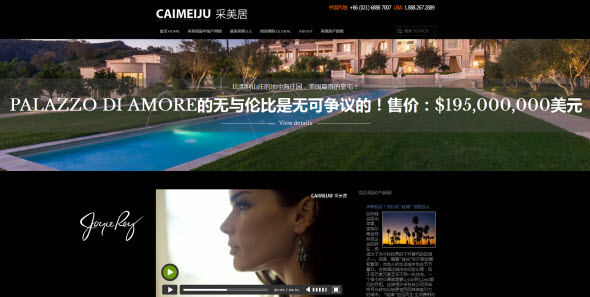
This is where sellers should make an important distinction.
Having a home visible online is not the same as marketing that home to China.
A standard luxury listing may appear on dozens or even hundreds of websites through automatic syndication. That sounds impressive in a listing presentation, but it doesn’t necessarily mean the right international buyer will ever see it.
China has its own digital ecosystem, search habits, social platforms, media channels and language expectations. A property presented only through American real estate portals is being marketed primarily for an American audience.
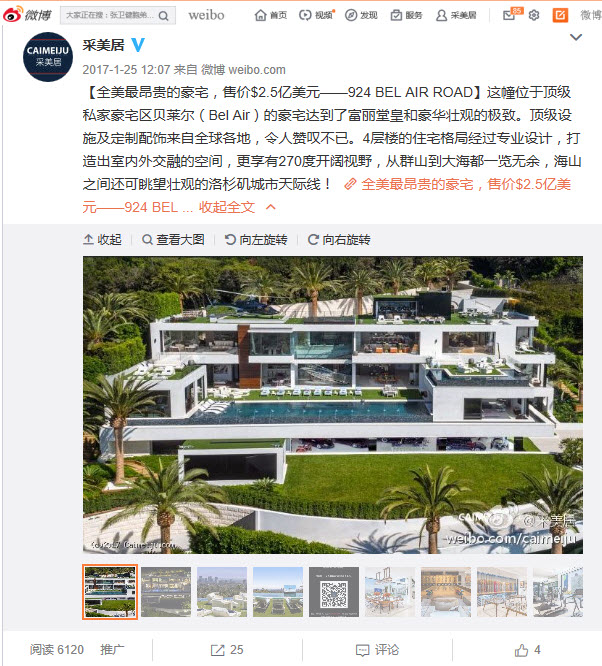
Professional localization matters as well.
A literal translation can communicate the number of bedrooms and bathrooms. It cannot necessarily communicate why Rancho Santa Fe, Newport Coast, Atherton, Beverly Hills, La Jolla or another California luxury community deserves the attention of someone thousands of miles away.
International marketing has to provide that context.
California Luxury Real Estate Marketing to China Has Changed
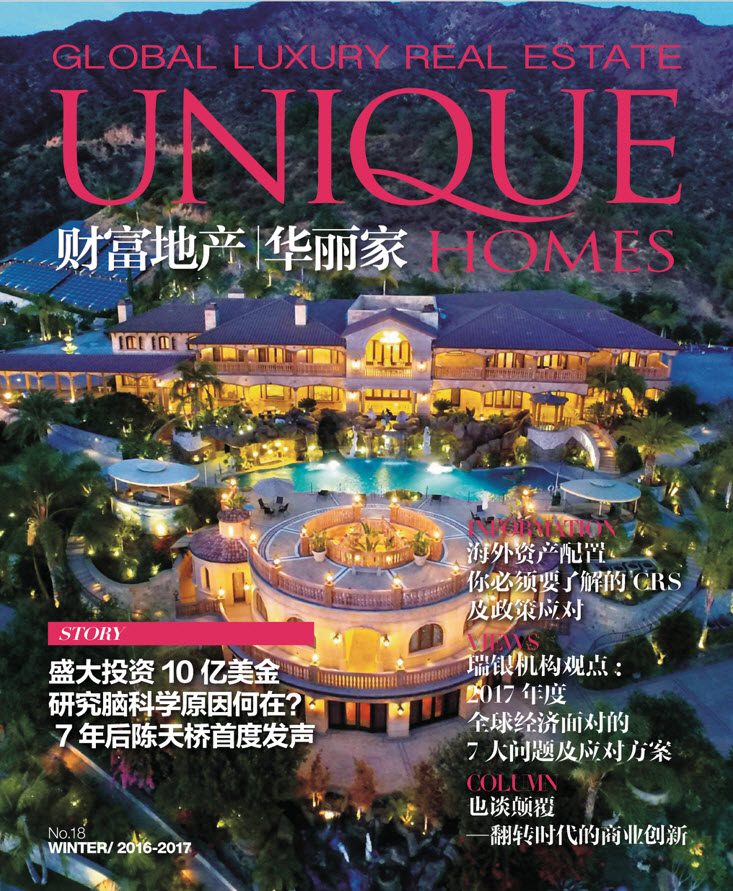
Caimeiju has had a front-row seat to that evolution.
Founded in 2009 specifically to connect affluent Chinese buyers with luxury real estate around the world, Caimeiju emerged during the early growth of Chinese interest in American luxury property. Over the years, the platform has worked with prominent agents and real estate companies across California’s leading luxury markets. In the San Francisco Bay Area, including Atherton, Menlo Park, Hillsborough and the surrounding Peninsula, that has included Judy Citron, the Gullixson Group and Erika Demma. In Los Angeles, Caimeiju has worked with Sally Forster Jones, Joyce Rey, Rodeo Realty, The Agency, Equity Union and other leading names in high-end residential real estate. In San Diego, Caimeiju works exclusively with LuxeAlly Real Estate to reach affluent Chinese buyers for luxury properties throughout Carmel Valley, Rancho Santa Fe, La Jolla, and Carlsbad.
Much has changed since then.
The large-scale buying wave disappeared. Chinese capital controls became stricter. Platforms changed. Social media changed. International travel changed. Buyers became harder to identify, and in many cases significantly wealthier.
That makes the old strategy of simply “putting a listing in China” much less relevant.
Today’s challenge is visibility, context and credibility.
A multimillion-dollar California property needs to reach the right audience, in the right language and in an environment where the home, its location and the listing agent all make sense to the prospective buyer.
That has been the central idea behind Caimeiju from the beginning, even as the tools used to accomplish it continue to evolve.
If You’re Selling an Expensive California Home, Should You Market to Chinese Buyers?

Not every home needs an international campaign.
But the more unusual, expensive or globally recognizable the property is, the stronger the argument becomes for exposing it beyond the immediate local market.
This is particularly true when a property offers characteristics that may appeal to globally mobile families: privacy, security, land, ocean or city views, proximity to highly regarded schools and universities, convenient airport access, a prestigious address or a lifestyle difficult to reproduce in an Asian city.
The objective isn’t to predict that “the buyer will come from China.”
Nobody can promise that.
The objective is to avoid unnecessarily limiting the buyer pool when the home itself has international appeal.
A seller only needs one buyer willing to value the property more highly than everyone else.
For a significant California residence, that person may live across town.
They may also live across the Pacific.
Questions to Ask an Agent Before Listing a Luxury Home
If international exposure is important to you, don’t simply ask a prospective listing agent whether your home will receive “global marketing.”
Ask what that actually means.
Where will the property appear outside the United States? Automatic syndication and intentional marketing are different things.
Will the property be professionally presented in Chinese? Luxury marketing requires more than machine translation.
How will the location be explained to someone unfamiliar with the local market? International buyers need context that local buyers already possess.
How will Chinese buyers actually discover the property? Ask about search, social media, Chinese-language content, direct networks and international agent relationships.
Who has the agent or company worked with before? International marketing is difficult to create overnight. Established relationships and experience matter.
For the right property, those questions can become just as important as photography, staging or the local launch strategy.
The Chinese Luxury Buyer Is Still Here — Just Harder to See
The headline numbers can appear contradictory.
Chinese buyers are purchasing fewer U.S. homes than they did during the boom years.
Yet they continue to spend more money on American residential real estate than buyers from any other foreign country, and California remains their preferred U.S. destination.
Both things can be true.
The market has become smaller, wealthier and more selective.
For California luxury-home sellers, that means international marketing shouldn’t be based on the assumptions of 2015. It should reflect how buyers discover property today, what they value and how much more fragmented the path to reaching them has become.
Caimeiju has been connecting luxury real estate with Chinese audiences since 2009. The channels have changed considerably since then.
The reason for doing it hasn’t.
If you are preparing to sell a significant California property and believe the buyer may come from beyond the local market, contact Caimeiju to discuss how the property can be positioned for Chinese and international exposure.
Frequently Asked Questions About Chinese Home Buyers in California
Are Chinese buyers still purchasing homes in California?
Yes. Chinese purchases have declined from their historical peak, but Chinese buyers remain the largest foreign buyer group in the United States by total dollars spent. California continues to be their leading U.S. destination.
How much do Chinese buyers spend on U.S. homes?
Chinese buyers purchased approximately $7.6 billion of U.S. residential real estate during the 12 months ending March 2026. Their average purchase price was approximately $1 million, according to the National Association of REALTORS®.
Do Chinese buyers pay cash for California homes?
Many international buyers do. In NAR’s 2026 data, 48% of international home purchases were all cash. Chinese buyers have historically ranked among the international groups most likely to purchase without mortgage financing.
What types of California homes appeal to wealthy Chinese buyers?
Preferences vary by buyer, but recognized locations, detached single-family residences, privacy, land, good schools, airport access and proximity to business, shopping and other everyday amenities can be important. Recent reporting on Chinese buyers in California also points to the importance of fang bian — a broader idea of convenience, ease and suitability.
How can I market my California luxury home to Chinese buyers?
Effective marketing usually requires more than listing syndication. Sellers should consider professional Chinese-language localization, Chinese digital channels, international agent and buyer networks, location-specific education and marketing created specifically for affluent Chinese audiences.
What is Caimeiju?
Caimeiju 采美居 is a luxury real estate platform founded in 2009 to connect affluent Chinese buyers with significant residential properties in California and other luxury markets around the world. Its work has included Chinese-language property marketing, Chinese search and social media exposure, video, localization and international luxury real estate marketing.